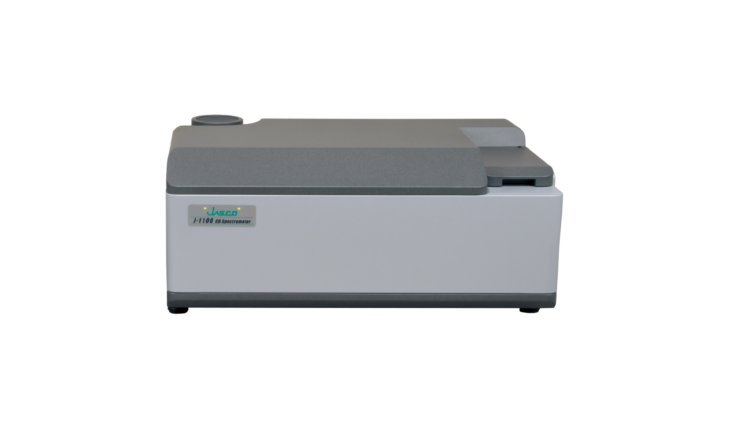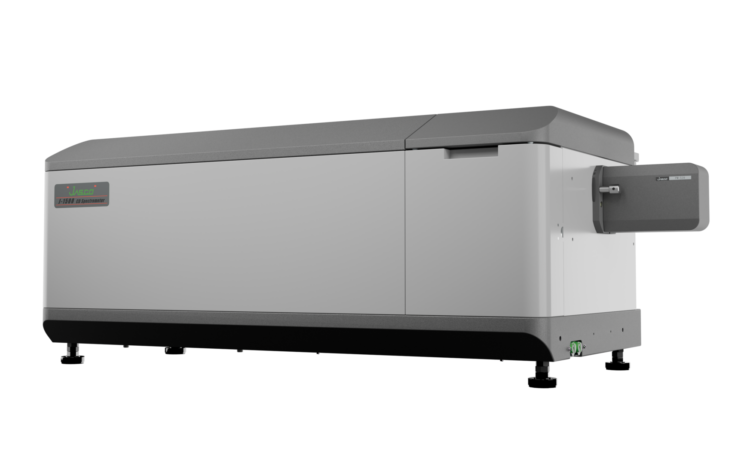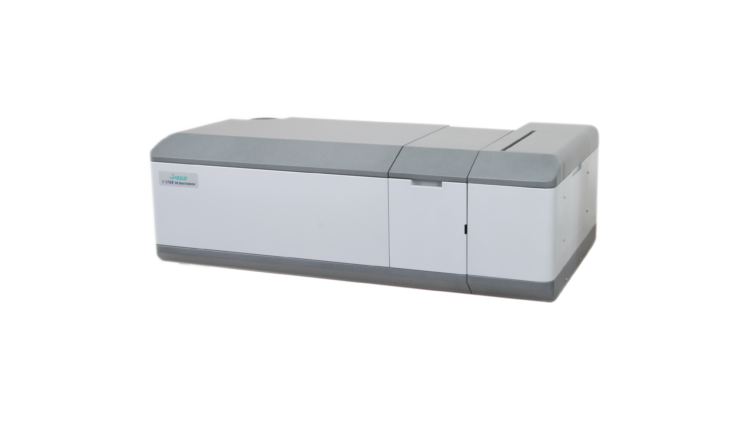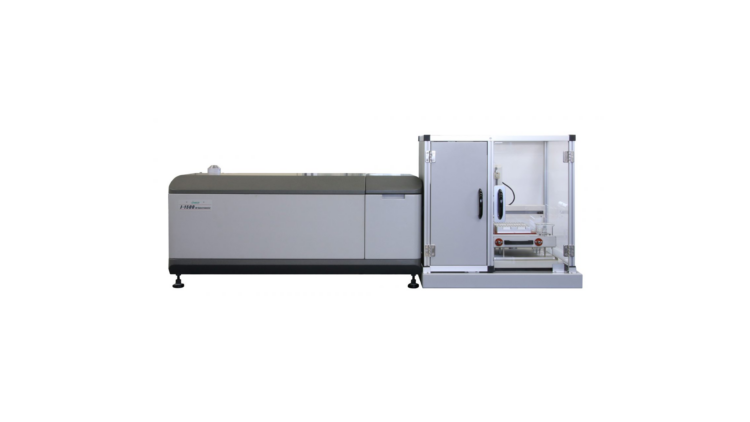






The J-1000 Series of Circular Dichroism spectrophotometers are specifically designed for high sensitivity measurements in the near- and far-UV regions, for scientists that need confidence in the data from characterization studies of biomolecule structure, function, and stability under a wide variety of experimental conditions.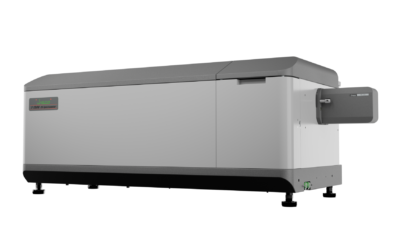
Unlike some detectors which only provide good signal-to-noise for low-absorbing materials, the J-1000 Series circular dichroism spectrophotometers use high dynamic range detectors to obtain high-quality spectra of samples with excellent signal-to-noise, especially for highly absorbing materials found in the far-UV.
Features of the J-1000 Series
- High optical throughput
- Double prism monochromator providing low stray light
- Wide dynamic range PMT detector
- Highly efficient nitrogen purge system
- Digital signal processing
- Simultaneous Multi-Probe: CD, LD, HT, DC, absorbance, fluorescence
Specs at-a-Glance
J-1000 Series Circular Dichroism Spectrophotometers
- J-1100
- Wavelength Range: ~180 nm to 600 nm (typical UV/Vis model)
- Standard Detector: PMT
- Modes: CD, LD, Absorbance HT, etc.
- Key Use: Biomolecule (protein/nucleic acid) secondary/tertiary structure analysis
- J-1500
- Wavelength Range: 163 nm to 1600 nm (PMT + optional InGaAs)
- Detectors: PMT, optional InGaAs
- Modes: CD, LD, Absorbance HT, etc
- Key Use: Biomolecule (protein/nucleic acid) secondary/tertiary structure analysis as well as expansion to any other applications.
- J-1700
- Wavelength Range: 163 nm to 2500 nm (far-UV through NIR) – extended coverage for deep NIR research
- Detectors: PMT + dual InGaAs with automatic interchange – broad detector sensitivity without manual swaps
- LD Capability: Supported and measurable (JASCO multi-probe LD included as part of standard instrument multi-probe measurement suite)
- Key Use: Advanced materials, metal complexes, NIR-active chiral systems
Benefits and Accessories
- Compact benchtop design
- Range of precise temperature control accessories
- High-throughput automated CD
- Automated titration and stopped-flow
- Spectra Manager™ software for control and extensive data analysis
- Flexible design allows field upgrades for different measurement capabilities as applications and budgets evolve
Temperature Control
Enhance your chiroptical experiments with precise temperature regulation and thermal scanning for conformational studies, unfolding/denaturation analysis, and thermodynamic profiling.
Temperature Control Options
- Single-Position Peltier Cell Holders (PTC-510, PTC-514, PTC-517)
- Thermostatted holders for individual cuvettes (rectangular or cylindrical up to 10 mm pathlength).
- Temperature range: –30 °C to 130 °C (settable).
- Includes integral temperature probe (positioned inside or adjacent to cell) and magnetic stirring to reduce thermal gradients.
- Supports temperature-dependent CD, LD and absorbance measurements.
- Multi-Position Peltier Cell Changers (MPTC-511, MPTC-513)
- Six-position holders for higher throughput or parallel experiments.
- Automated parallel thermal ramps, single- or multi-wavelength thermal ramps, and spectral scans at preset temperatures.
- Applicable to CD, LD, and absorbance measurements with individual temperature sensors and stirrers per cell.
- Works with software control for unattended thermal profiles.
Temperature Control Workflows
- Thermal Ramping & Melting Curves
- Integrated temperature scan programs to measure CD signal changes as a function of temperature.
- Ideal for protein unfolding, secondary/tertiary structure stability, Tm determination, and thermodynamic parameter extraction (ΔH, ΔS).
- Thermal Wavelength Scans
- Acquire full spectral data across defined temperature series.
- Enables visualization of temperature-dependent spectral shifts and structural transitions
- High-Throughput Temperature Control (HTCD Systems)
- Combine multi-well plate handling with Peltier-controlled flow cells for automated measurement sequences, including thermal ramps and spectral scans on many samples.
- Supports CD, LD, absorbance, and optional simultaneous fluorescence detection.
Wide Range of Applications
- Protein conformational studies
- Evaluation of secondary and tertiary structure
- Quantitative analysis of pharmaceuticals
- Formulation studies
- Protein folding studies
- DNA/RNA interactions
- Enzyme kinetics
- Purity testing of optically active substances
- Natural products chemistry
Model-by-Use-Case Comparison
| Typical Application | Recommended Models | Why/Key Capabilities | Suggested Accessories & Workflows |
|---|---|---|---|
| Protein Secondary Structure & Folding | J-1100 J-1500 | High-sensitivity far-UV CD for α-helix and β-sheet analysis. Extended vacuum-UV access (to ~163 nm on J-1500) improves higher-order structure characterization. | Peltier temperature control Thermal ramp / melt analysis Secondary structure analysis software |
| Ligand Binding & Conformational Changes | J-1500 J-1700 | Broader wavelength range with high S/N performance. Multi-probe CD, LD, and absorbance modes for monitoring structural shifts. | Temperature-controlled titration workflows Stopped-flow kinetics Automated sampling systems |
| Supramolecular Systems & NIR Applications | J-1700 | Extended wavelength range up to 2500 nm. PMT + dual InGaAs detectors with automatic switching. Ideal for metal complexes, nanomaterials, and NIR-active chiral systems. | InGaAs detector configuration Specialized sampling cells Advanced spectral analysis workflows |
| High-Throughput Screening | HTCD System (with J-1500 or J-1700) | Automated measurement of large sample sets (up to 192 samples). Ideal for biotherapeutics screening, formulation studies, and QC environments. | HTCD autosampler Microplate temperature control Batch processing software |
| Thermodynamic & Temperature-Dependent Studies | J-1100 J-1500 J-1700 | Programmable temperature ramps and wavelength scans. Enables Tm determination and thermodynamic parameter analysis. | Single- or multi-position Peltier holders Automated temperature scan programs |
| Teaching & Routine CD Measurements | J-1100 | Compact, user-friendly system for routine biomolecular CD and educational laboratories. | Standard cuvette holders Basic CD and absorbance workflows |