
LC-4000 Series Analytical HPLC, RHPLC, and UHPLC
The LC-4000 Series is a modular family of analytical HPLC, RHPLC, and UHPLC systems designed to deliver exceptional performance for routine quality control, analytical method development, and advanced research applications. Available in two pressure platforms, the LC-4000 Series enables laboratories to select the ideal chromatography system based on operating pressure, column technology, and analytical workflow requirements.
Whether your laboratory requires a conventional high-performance liquid chromatography (HPLC) system for validated analytical methods or an ultra-high-performance liquid chromatography (UHPLC) system capable of maximizing the performance of sub-2 μm columns, the LC-4000 Series provides flexibility, reliability, and scalability to support both current and future analytical challenges.
- Analytical HPLC & RHPLC Systems (Up to 70 MPa / 700 bar / 10,000 psi): Designed for 2, 3, 5, and 10 μm fully porous columns as well as superficially porous (core-shell) columns, delivering improved chromatographic efficiency while maintaining compatibility with established HPLC methods and validated workflows.
- Analytical UHPLC Systems (Up to 130 MPa / 1,300 bar / 19,000 psi): Optimized for sub-2 μm particle size columns to provide maximum resolution, sensitivity, speed, and solvent efficiency for high-throughput and demanding analytical applications.
From routine analyses to advanced research, the LC-4000 Series provides a chromatography platform that balances performance, method compatibility, productivity, and long-term investment protection.
Analytical HPLC and RHPLC Systems up to 70 MPa
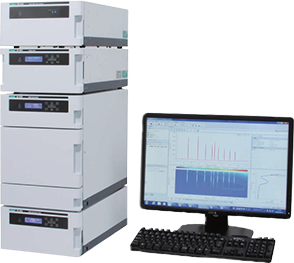
The LC-4000 Series analytical HPLC and RHPLC systems combine the proven reliability of conventional HPLC with the additional pressure required to fully utilize today’s advanced column technologies. Operating at pressures up to 70 MPa (700 bar / 10,000 psi), these systems support 2, 3, 5, and 10 μm fully porous columns, as well as superficially porous (core-shell) columns, allowing laboratories to improve chromatographic performance without transitioning to a dedicated UHPLC platform.
The additional pressure capability enables higher chromatographic efficiency, improved resolution, sharper peak shapes, and shorter analysis times while preserving compatibility with existing analytical methods. Many laboratories can modernize established methods simply by adopting smaller particle size or core-shell columns, minimizing method redevelopment and reducing implementation costs.
The LC-4000 Series Analytical HPLC and RHPLC systems combine the proven reliability of conventional high-performance liquid chromatography (HPLC) with the additional pressure needed to fully utilize today’s advanced column technologies. Operating at pressures up to 70 MPa (700 bar / 10,000 psi), the system supports traditional 5 and 10 μm columns, 2 and 3 μm fully porous columns, and superficially porous (core-shell) columns, providing laboratories with greater flexibility while maintaining compatibility with established HPLC methods and validated analytical workflows.
Engineered for long-term reliability and reproducibility, the modular LC-4000 platform accommodates a wide range of column dimensions, flow rates, mobile phase compositions, and detector configurations, making it well suited for pharmaceutical quality control, food analysis, environmental testing, chemical analysis, academic research, and routine analytical laboratories.
For laboratories seeking higher performance while maintaining broad HPLC compatibility, the LC-4000 Series RHPLC platform delivers an ideal balance of efficiency, flexibility, reliability, and investment protection.
Analytical UHPLC Systems up to 130 MPa
The LC-4000 Series analytical UHPLC system is designed for laboratories requiring the highest levels of chromatographic performance. With a maximum operating pressure of 130 MPa (1,300 bar / 19,000 psi), it is optimized for sub-2 μm particle size columns, enabling ultra-high-efficiency separations with superior resolution, increased sensitivity, faster analysis times, and lower solvent consumption.
Purpose-built for modern UHPLC, the LC-4000 Series incorporates low-dispersion fluidics, reinforced high-pressure components, and low-dead-volume detector flow cells to minimize band broadening and preserve peak integrity. These design features maximize the efficiency of modern UHPLC columns while supporting short, narrow-bore columns and low flow rate methods that increase sample throughput, improve laboratory productivity, and reduce solvent usage.
The LC-4000 Series UHPLC platform is ideal for pharmaceutical, biotechnology, food safety, environmental, chemical, and academic laboratories performing complex separations, impurity profiling, trace-level analysis, and advanced method development. As UHPLC column technology continues to evolve, the LC-4000 Series provides the pressure capability and low-dispersion design needed to support both current and next-generation analytical workflows.
Proven Across a Wide Range of Applications
The LC-4000 Series HPLC, RHPLC, and UHPLC systems are trusted by laboratories worldwide across the pharmaceutical, biotechnology, food, environmental, chemical, and academic sectors. The modular architecture and broad detector compatibility support applications ranging from routine quality control and stability testing to quantitative analysis, method development, impurity profiling, and advanced research.
The application notes below demonstrate the versatility of the LC-4000 Series through real-world examples, including the analysis of pharmaceutical compounds, UV absorbers in sunscreens, food contaminants such as aflatoxins, and many other challenging chromatographic separations.